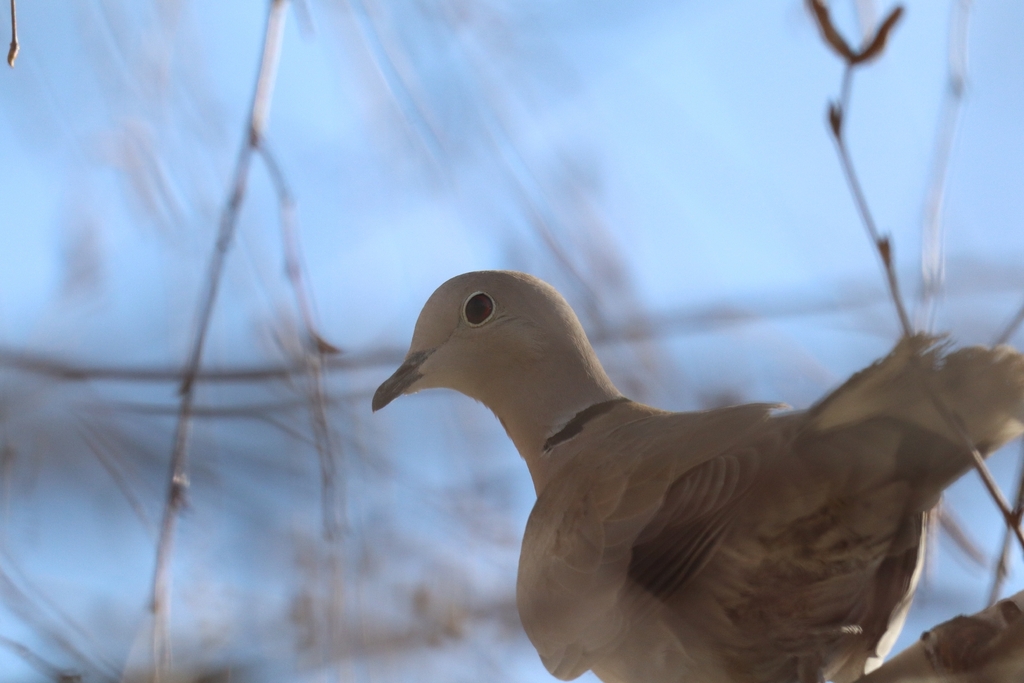
Eurasian Collared-Dove
The Eurasian collared dove (Streptopelia decaocto), often called the collared dove, is a dove species from the genus Streptopelia. It is grey-buff to pinkish-grey, and has a black half-collar edged with white on its nape, alluding to the name. It is native to Europe, Asia, and North Africa. It has also been introduced to Japan, North and Central America, and select Caribbean islands.
In Türkiye
Recorded in Türkiye throughout the year.
Provinces where it makes up the largest share of bird records.
Adjusted for how many birdwatchers are out each month; the busiest month = 100%.
54,896 records from Türkiye · #9 of 634 species by number of records. Source: GBIF.org (October 2026). All birds of Türkiye
About
The Hungarian naturalist Imre Frivaldszky first described the Eurasian collared dove with the scientific name Columba risoria varietas C. decaocto in 1838, considering it a wild variety of the domesticated barbary dove. The type locality is Plovdiv in Bulgaria. It is now placed in the genus Streptopelia that was described in 1855 by the French ornithologist Charles Lucien Bonaparte.
The Burmese collared dove (S. xanthocycla) was formerly considered a subspecies of the Eurasian collared dove, but was split as a distinct species by the IOC in 2021. Two other subspecies were formerly sometimes accepted, S. d. stoliczkae from Turkestan in central Asia and S. d. intercedens from southern India and Sri Lanka; they are now considered junior synonyms of the species.
Text from Wikipedia (CC BY-SA 4.0)
At a glance
The collared dove spread from Asia across all of Europe in the last century, one of the fastest natural range expansions known.
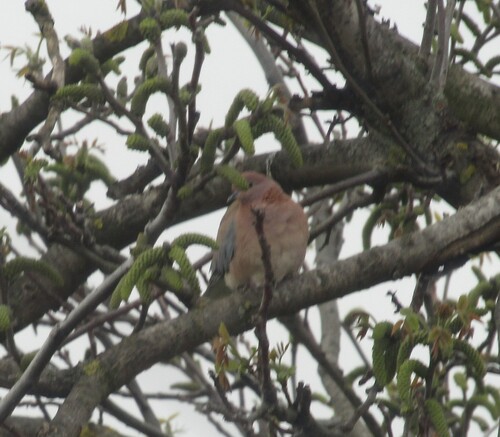
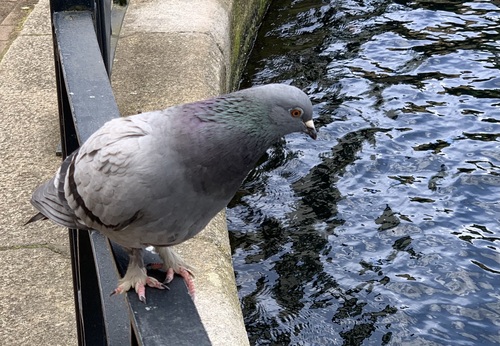
Similar birds
All birds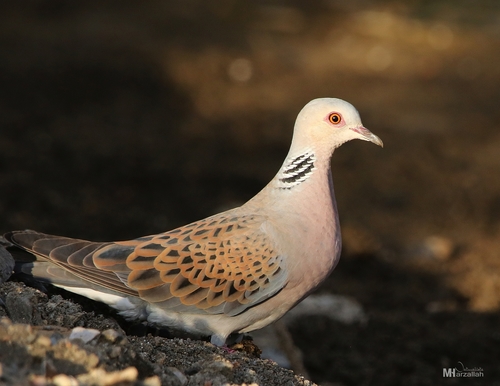
Heard this one in the wild?
Record it and Birdy will confirm — then it's in your journal.