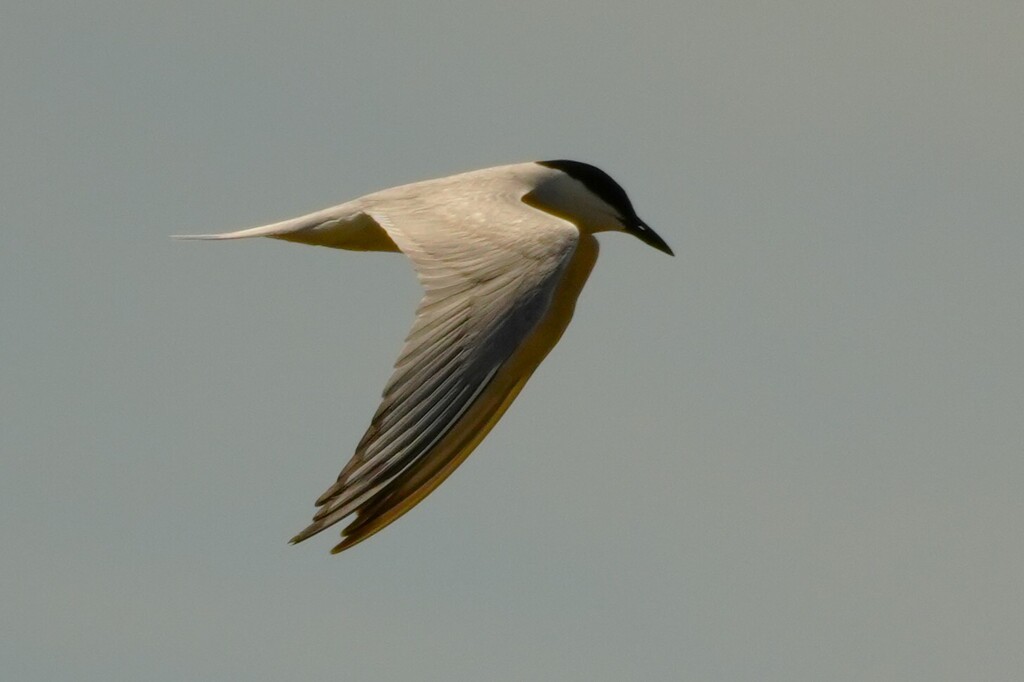
Gull-billed Tern
The gull-billed tern (Gelochelidon nilotica) is a tern in the family Laridae. It is widely distributed and breeds in scattered localities in Europe, Asia, northwest Africa, and the Americas. The Australian gull-billed tern was previously considered a subspecies.
In Türkiye
Arrives in spring and leaves in autumn; winter records are almost absent.
Most records in April and June–August.
Provinces where it makes up the largest share of bird records.
Adjusted for how many birdwatchers are out each month; the busiest month = 100%.
3,778 records from Türkiye · #191 of 634 species by number of records. Source: GBIF.org (October 2026). All birds of Türkiye
About
The gull-billed tern was formally described in 1789 by the German naturalist Johann Friedrich Gmelin in his revised and expanded edition of Carl Linnaeus's Systema Naturae. He placed it with terns in the genus Sterna and coined the binomial name Sterna nilotica. Gmelin based his description on the "Egyptian tern" that had been described in 1785 by the English ornithologist John Latham in his book A General Synopsis of Birds. Latham had in turn based his own account on that by the Swedish naturalist Fredrik Hasselquist that was published in 1757. The gull-billed tern was moved to the resurrected genus Gelochelidon based on a molecular phylogenetic study published in 2005. The genus had been introduced in 1830 by the German zoologist Christian Ludwig Brehm. The genus name combines the Ancient Greek gelaō meaning "to laugh" with khelidōn meaning "swallow".
Text from Wikipedia (CC BY-SA 4.0)
At a glance
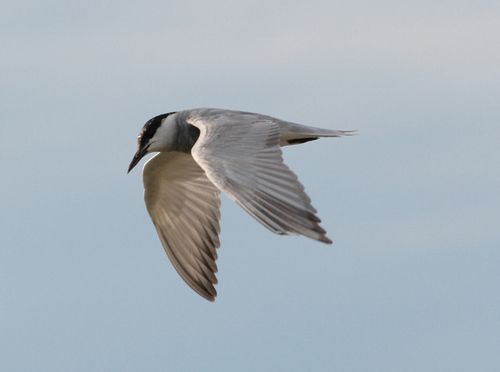
The gull-billed tern has a short, thick gull-like black bill and hunts insects and lizards over land more than fish.
Similar birds
All birds
Heard this one in the wild?
Record it and Birdy will confirm — then it's in your journal.