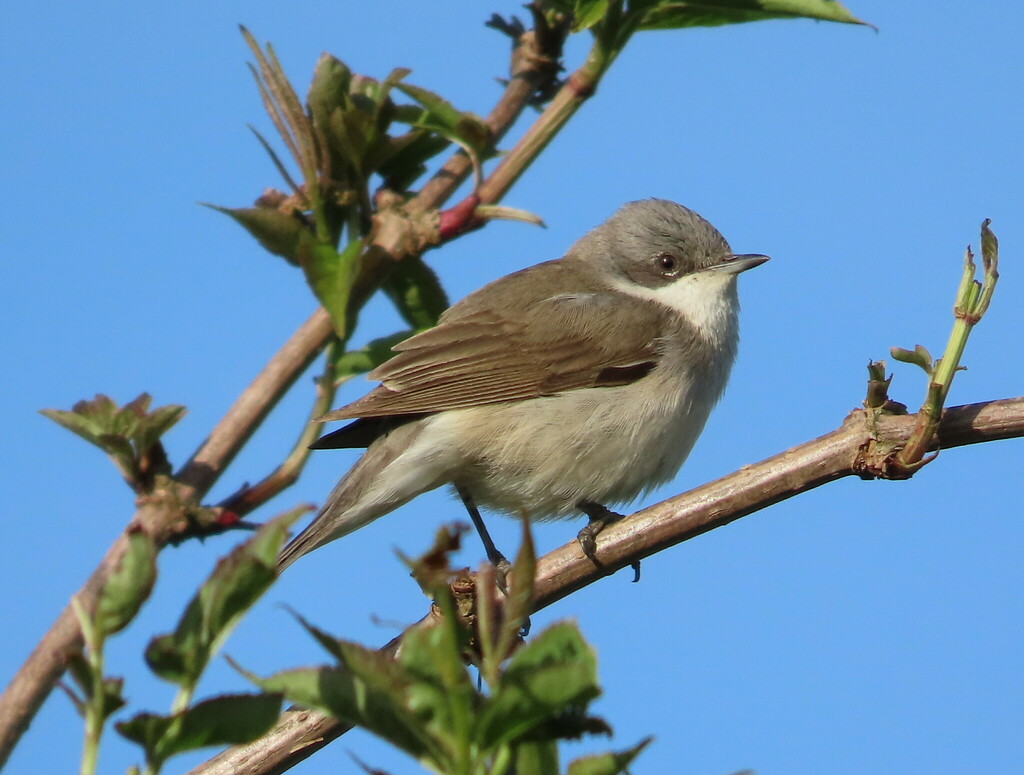
Lesser Whitethroat
The lesser whitethroat (Curruca curruca) is a common and widespread Old World warbler which breeds in temperate Europe, except the southwest, and in the western and central Palearctic. This small passerine bird is strongly migratory, wintering in Africa just south of the Sahara, Arabia and India.
In Türkiye
Arrives in spring and leaves in autumn; winter records are almost absent.
Most records in April and September.
Provinces where it makes up the largest share of bird records.
Adjusted for how many birdwatchers are out each month; the busiest month = 100%.
13,515 records from Türkiye · #72 of 634 species by number of records. Source: GBIF.org (October 2026). All birds of Türkiye
About
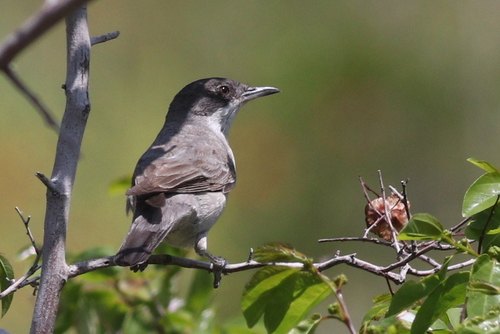
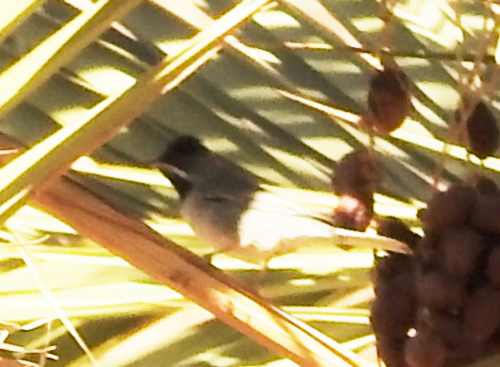
Unlike many sylviid warblers, the sexes are almost identical. This is a small species with a grey back, whitish underparts, a grey head with a darker "bandit mask" through the eyes and a white throat. It is slightly smaller than the common whitethroat, and lacks the chestnut wings and uniform head-face colour of that species. The lesser whitethroat's song is a fast and rattling sequence of tet or che calls, quite different from the common whitethroat's scolding song.
Like most "warblers", it is insectivorous, but will also take berries and other soft fruit. This is a bird of fairly open country and cultivation, with large bushes for nesting and some trees. The nest is built in low shrub or brambles, and 3 to 7 eggs are laid.
Text from Wikipedia (CC BY-SA 4.0)
At a glance
The lesser whitethroat is told by its dark face mask, ends its song with a dry rattle, and unusually migrates south-east to Africa.
Similar birds
All birds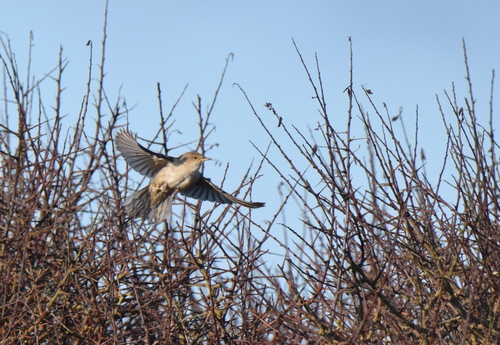
Heard this one in the wild?
Record it and Birdy will confirm — then it's in your journal.