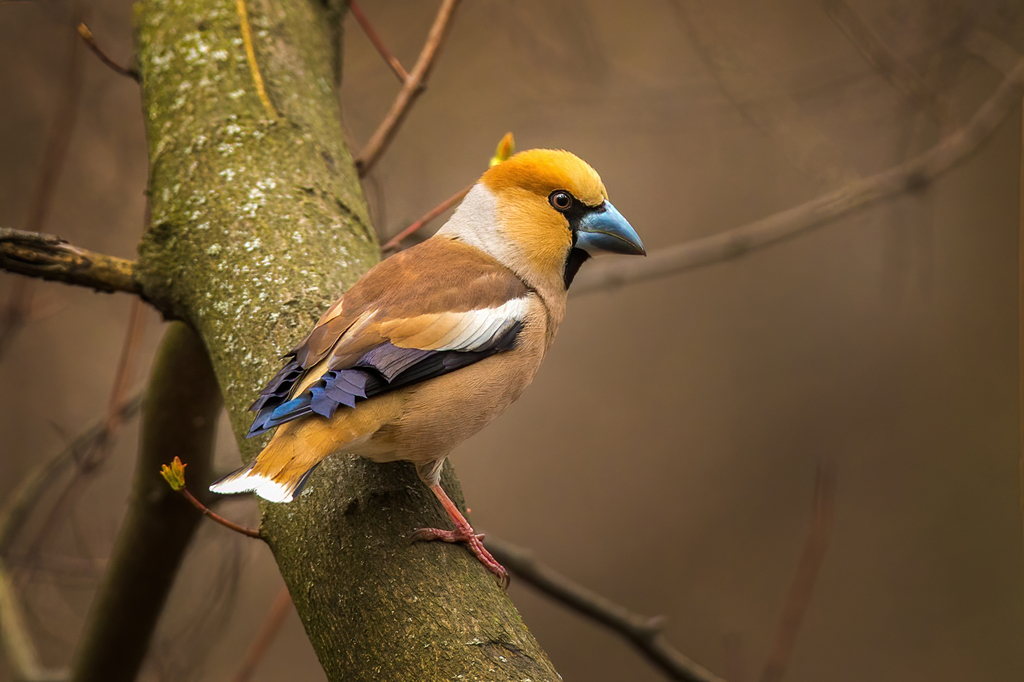
Hawfinch
The hawfinch (Coccothraustes coccothraustes) is a passerine bird in the finch family Fringillidae. It is the only extant species placed in the genus Coccothraustes. Its closest living relatives are the genus Eophona of East Asia, and Hesperiphona of Central and North America.
In Türkiye
Recorded in Türkiye throughout the year.
Provinces where it makes up the largest share of bird records.
Adjusted for how many birdwatchers are out each month; the busiest month = 100%.
4,459 records from Türkiye · #178 of 634 species by number of records. Source: GBIF.org (October 2026). All birds of Türkiye
About
This bird breeds across Europe and temperate Asia (Palearctic). It is mainly resident in Europe, but many Asian birds migrate further south in the winter. It is a rare vagrant to the western islands of Alaska.
Deciduous or mixed woodland, including parkland, with large trees – especially hornbeam – is favoured for breeding. The hawfinch builds its nest in a bush or tree, and lays 2–7 eggs. The food is mainly seeds and fruit kernels, especially those of cherries, which it cracks with its powerful bill. This large finch species is usually seen in a pair or small group.
The 16.5–18 cm long hawfinch is a bulky bull-headed bird, which appears very short-tailed in flight. Its head is orange-brown with a black eyestripe and bib, and a massive bill, which is black in summer but paler in winter. The upper parts are dark brown and the underparts orange.
The white wing bars and tail tip are striking in flight. The sexes are similar. The call is a hard chick. The song of this unobtrusive bird is quiet and mumbled.
Text from Wikipedia (CC BY-SA 4.0)
At a glance
The hawfinch's massive bill can crack cherry and olive stones, exerting a bite force of tens of kilograms.
Similar birds
All birds
Heard this one in the wild?
Record it and Birdy will confirm — then it's in your journal.